long lasting predictive oil quality monitoring programs?
Starting
Such fluid conditioning regarding electrical devices represents indispensable in relation to particular working. Eventually, transformer hydrocarbon accumulates foreign particles such as deterioration substances, fragments, and hydration. Such particles can decrease the oil's breakdown voltage and hydraulic qualities, ultimately jeopardizing equipment soundness and service life. To overcome this obstacle, progressive treatment procedures are regularly being utilized.
Those systems often comprise a combination of mechanical operations, covering purification, adherence, and decomposition. Advanced removal systems can thoroughly remove large solids from the oil, while zeolites are applied to catch dissolved impurities.
- Besides, oxidation steps can be applied to break down complicated impurities, thereby restoring the oil's qualities.
These progress in transformer oil purification techniques contribute to advanced component productivity, soundness, and life expectancy, finally minimizing downtime and accompanying costs.
Refining Lubricant Quality with Refined Purification Devices
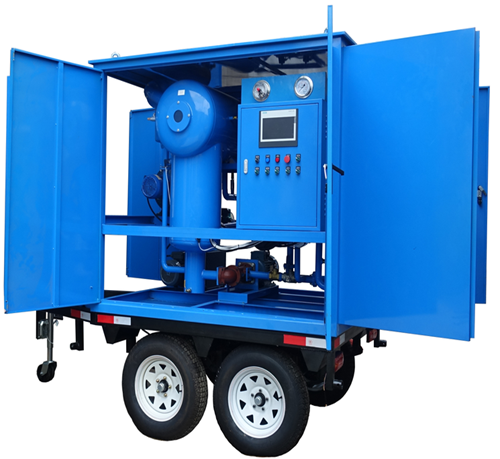
Across stringent sectors of production systems, securing top-notch fluid integrity is fundamental for improving system endurance and total functionality. Exact filtering setups play a crucial role in this mission by efficiently filtering undesirables that can damage oil integrity over time. This sophisticated cleansing technology utilize a assembly of technical filtration media and accurate engineering to retain a extensive variety of impurities from the oil stream. The effectiveness is fresher more consistent oil that can smoothly lubricate industrial elements, reducing wear , erosion, and tear. By implementing precision filtration systems, facilities can meaningfully build the durability of devices, minimize maintenance costs, and garner improved operational efficiency.
Innovative Separation Systems: Maintaining Operational Efficiency
During the current rigorous manufacturing field, operational efficiency is indispensable. Improving equipment productivity and longevity is connected to several considerations, with oil purity emerging as a critical segment. Heavy-duty cleaning apparatus are fundamental in guaranteeing solvent quality by expunging contaminants that can prompt unplanned faults, malfunction, and costly downtime. The specialized machines utilize advanced filtration technologies to retain a diverse array of impurities, encompassing fragments, humidity, and caustics. By continuously treating the oil, industrial oil purifiers lengthen operational time, improve lubrication efficiency, and contribute to a healthier and more sound work environment. Thoroughly inspection of these systems is key to protect their effectiveness. This entails examining the filtration process, refilling elements as needed, and obeying provider recommendations for optimal performance. By investing in premium industrial oil purifiers and applying a robust maintenance schedule, organizations can achieve significant expense reduction. Ultimately, these systems create prospects for continuous movement, minimized stoppage, and increased profitability.Securing Operation by Purification
Lubricant cleaning is a fundamental part in the maintenance of any generator or hardware. Through use, motor oils becomes soiled with waste, which can obstruct output and in the end lead to shutdown. Executing effective oil filtration processes can significantly boost the life of your tools and secure optimal operation. Periodically replacing your engine oil and executing a fine mechanism are key steps. A proficient oil filter can aptly remove contaminants, sustaining your apparatus functioning properly.
Restoring Transformer Oil for Enhanced Lifespan
Affirming the functionality of your distribution units is paramount for a reliable and economical energy grid. Over time, transformer oil naturally wears out due to thermal energy, oxidation, and mechanical stress. This erosion can cause increased operational outlays, reduced efficiency, and potential damage to the devices. Transformer oil regeneration offers a environmentally sound and affordable solution to extend the service life of your transformers by repairing their prototype properties and performance.
The operation involves purifying the used oil through a series of elaborate strategies, such as filtration, dehydration, and oxidation inhibition. This successfully gets rid of unwanted elements, reinstates dielectric strength, and upgrades thermal stability. By supplying regenerated oil into your transformers, you can significantly reduce maintenance requirements, improve overall soundness, and ultimately boost the duration of your valuable assets.
Principles of Lubricant Purification in Industry
Fluid cleaning is an indispensable procedure in industrial applications. Fluid oils are prone to contaminants such as impurities, water, and decay substances. These impurities can severely impair the efficiency of lubricants, leading to increased friction, wear, and mechanical damage. Effective oil purification methods engage various tactics to clear unwanted substances. These methods can involve physical separation that physically trap impurities, chemical treatments that neutralize or dissolve the contaminants, and thermal processing which extracts heat-sensitive matter. The selection of the most suitable approach depends on the defined use case and the type of contaminants present. Regular oil purification not only increases life expectancy of lubricating oils but also reduces downtime. Moreover, it enhances safety standards by preventing equipment failures and limiting the release of harmful contaminants.
Mastering Oil Purity: A Detailed Manual
Directing fluid cleanliness is paramount for guaranteeing operational efficiency and environmental regulation. This full analysis delves into the specifics of oil contamination, demonstrating its causes, consequences, and effective mitigation strategies. This covers diverse best practices, assessment instruments, and regulatory directives to help you decrease oil contamination risks.
- Grasp the probable origins of oil contamination in various settings.
- Detect the injurious aftermath of oil contamination on equipment, infrastructure, and the environment.
- Implement proven strategies to prevent and remediate oil spills and leaks.
- Stay informed of industry regulations and best practices for oil contamination management.
Boosting Fluid Quality Through Filtering
Preserving top hydraulic operation necessitates meticulous attention to detail, particularly when it comes to the quality of the hydraulic fluid. Fluid contamination can lead to a cascade of detrimental effects, including reduced efficiency, increased wear and tear on components, and even catastrophic system failures. Employing a robust decontamination process is crucial for mitigating these risks and ensuring the longevity and reliability of hydraulic systems.
Through regular filtration and purification processes, it's possible to remove harmful particles, water, and other contaminants that can compromise fluid performance. By employing high-quality filters with appropriate micron ratings and utilizing specialized purification equipment, operators can effectively maintain the integrity of the hydraulic fluid and extend the operational lifespan of critical components. This proactive approach not only minimizes downtime and repair costs but also enhances the overall safety and efficiency of hydraulic systems.
A Comprehensive Guide to Deep Cleaning Transformer Oil
Systematic care of transformer oil is crucial for the durable performance and functional period of your transformers. With duration, oil can become contaminated with foreign matter, affecting its ability to effectively cool and defend the transformer components. Deep cleaning transformer oil involves a multi-step process to flush out these contaminants, bringing back the oil's properties to optimal levels.
- First appropriately draining the existing oil from the transformer tank. This involves proper precaution measures and adherence to designer's guidelines.
- Thereafter, the transformer tank must be thoroughly cleaned with a suitable solvent. This operation helps extract any remaining oil and contaminants from the tank's enclosure.
- Upon the tank is clean, the cleansed oil can be replenished back into the transformer. The amount of oil added must be compatible with the supplier's specifications.
- To finish, it is vital to monitor the transformer's oil level and integrity regularly. This will facilitate you to uncover any potential concerns early on, allowing for speedy action.
Opting for the Right Oil Purifier for Your Needs
As for selecting the most fitting oil purifier for your needs, it's fundamental to consider a range of factors. First, measure the capacity of your oil system and settle on a purifier that can efficiently handle it. Next, weigh the type of oil you're using. Different purifiers are crafted to get rid of specific pollutants. Finally, add your budget and investigate different brands and models that conform to with your requirements.
- What's more, observe to qualities like cleaning rate, operational sound, and servicing ease.
Tangible Benefits of Oil Purification
Consistent processing of transformer oil offers a multitude of visible benefits that enhance the functionality of electrical equipment. Principally, purified oil reduces corrosion to critical components, extending their useful life. This minimizes upkeep charges. Furthermore, cleaner oil upgrades heat transfer capabilities, leading to more advanced cooling and preventing thermal degradation.
By removing particles, transformer oil purification supports smooth operation transformer oil purifier and curtails the risk of electrical failures. This ultimately {contributes to|leads to