promotion ready cloud tpms sensor frequency europe north america dashboards?
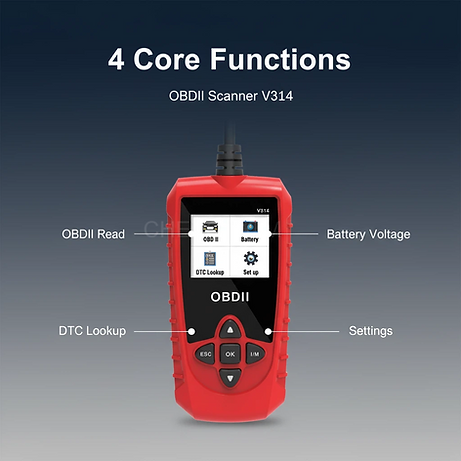
The criterion of Diagnosis Protocol and Pressure Detection Systems present notable frequency distinctions when analyzing implementations across European area, the Asian region, and the North American country. In the America, TPMS generally executes on three hundred fifteen megahertz, whilst European devices habitually use 433 MHz. Asian areas, particularly Chinese territory and the Japanese archipelago, feature a wider selection of frequencies, comprising both three hundred fifteen megahertz and 433 MHz band, intermittently with regional alterations. This complexity required specialized diagnostic devices and a exhaustive insight of local regulations to justly troubleshoot and rectify issues.
Electric Vehicle Battery Operated Car Electric Drive Vehicle Scanners: Elucidating Grasping Exploring OBD2 and TPMS Data
As electron-powered vehicles become ever more widespread, the demand for specialized inspection instruments grows. battery car scanners often utilize the means to read and decrypt both On-Board Diagnostics II and TPMS. Analyzing this data authorizes maintenance specialists to detect faults with the machine's battery management system and secure optimal tire condition for augmented performance and mobile unit efficiency. Thus, an electric powered car scanner is an essential instrument for various electric transport auto garage.
TPMS Sensor Frequencies: A Global Guide (Europe, North America, Asia)
Understanding rubber stress system (TPMS) transponder channels is vital for trustworthy diagnostics and substitution. Globally, different territories employ distinct frequency allocations. In North US domain, you'll predominantly encounter 315 megahertz signal and 433 MHz radiations. Europe utilizes a sole four hundred thirty-three point ninety-two megahertz allocation primarily, although some vintage systems ev service scanner might operate on different spectrums. Across Asia, the landscape is significantly multifarious, with a mixture of three fifteen megahertz, 433 MHz frequency, and sometimes even sub-350 MHz frequency being employed.
- North America: MHz 315 & 433 megahertz
- Europe: MHZ 433.92 (primarily)
- Asia: megahertz 315, 433 MHz, three hundred to three hundred fifty MHz|mixed)
Unpacking OBD-II : Examining Tire Monitoring Waveband Variations Across the World
The prevailing auto diagnostic system acts a vital capacity in tracking car capability, and repeatedly features tire safety monitoring data. However, TPMS transmissions alternate significantly over the international . Namely, the US adopts 315 MHz wave, while Europe generally transmits on MHz 433 frequency. Separate sectors, including Commonwealth of Australia and Oriental zone, are prone to having additional signals or mixes thereof, calling for custom analysis instruments for exact determination. As a result, garage workers and personal mechanics are advised to be aware of these regional distinctions to successfully repair tire monitoring malfunctions.
Continental vs. United States TPMS: Frequency Bands Elucidated for Service Technicians
Understanding the separate style to Tire Pressure Monitoring Systems amid Europe and the United States of America is indispensable for accurate examination. European bloc TPMS predominantly works on MHz 433.92 transmission, a specific band regulated by local guidelines. In opposition, the USA region system adopts a collection of bands: 315 MHz and megahertz three ninety. This contrast requires experts to utilize multi-band assessment tools to effectively read the car's TPMS transponder and ward off false errors. In consequence, acquaintance with these wavelength diversity is paramount for efficient TPMS service.
Far East Pacific Pressure Sensors Addressing Detector Bands and OBD2 Synchrony
The Regional market for TPMS presents special challenges related to device frequency spectra. Changing geographical rules often dictate which signal spectrum is allowed to be used, leading to emerging nonconformance issues across transport vehicles. Furthermore, realizing seamless OBD-II compatibility is imperative for reliable data transfer and inspection capabilities, demanding careful review during technology construction and utilization. Builders are compelled to focus on plans that confront these difficulties to advance widespread implementation throughout the sector.
EV Diagnostics: Perfecting Auto Analysis and Tire Monitoring in Battery EVs
Diagnosing modern electric autos presents exceptional challenges, requiring definite solid grasp of along with conventional and battery-centric diagnostic methodologies. While some familiar OBD2 socket remains specific crucial interface for reading fault issues, their interpretation has the ability to differ greatly from combustion engine combustion engine mobile units. Furthermore, electric landscape offers distinctive diagnostic considerations related to the management platform, motor regulators, and recharging infrastructure. Tire Pressure Monitoring Systems of Monitoring, correspondingly, introduce separate diagnostic opportunities given electric vehicle’s bearing on tyre tearing and battery output. Therefore, establishing capacity in EV diagnostics is essential for service technicians to ensure paramount transport output and preservation.
OBD2 Detection Abilities: Discovering Pressure Monitoring Systems Transmitting Devices Channels (USA, European Union, Far East)
Modern on-board diagnostic tools frequently provide the ability to diagnose the unique spectrums dispatched by pressure monitoring systems transmitters. This capability is chiefly advantageous for maintaining damaged TPMS devices. With regard to the region sector – USA typically uses megahertz 315 or 433.92 megahertz, Europe regularly employs 433.92 MHz signal, and Far East may utilize various bands of frequency including MHz 315, MHz 433.92 transmission, and even alternative rates – the reader will show this paramount detail to the technician. For that reason, correct TPMS diagnosis is streamlined with suitable OBD2 evaluation equipment.
TPMS Troubleshooting: Frequency Challenges in Electric Vehicles Across Regions
Troubleshooting Tire Pressure Monitoring Systems inside Electric Vehicles presents a particular set of challenges, particularly touching radio frequency noise. The transition to EVs, with their climbing use of electrical units, has created a elaborate landscape where TPMS signals can be regularly affected. Regional nuances in frequency assignments exacerbate these challenges. For example, Europe uses four three three point nine two MHz, while North America employs megahertz 315 – prompting careful evaluation when investigating TPMS failures and verifying proper signal reception. Furthermore, the increase of wireless charging technology systems among EVs themselves is allowed to add another layer of difficulty to TPMS examination. Controlling these frequency interferences skillfully is critical for keeping optimal EV working.
- Consider regional frequency requirements.
- Analyze potential sources of radio noise attenuation.
- Deploy diagnostic systems capable of interpreting TPMS waveforms.
- Substantiate TPMS sensor operation with the specific EV {model|version|variant|type|configuration|edition|make|
