warranty covered truck mounted ultrasonic distance sensors?
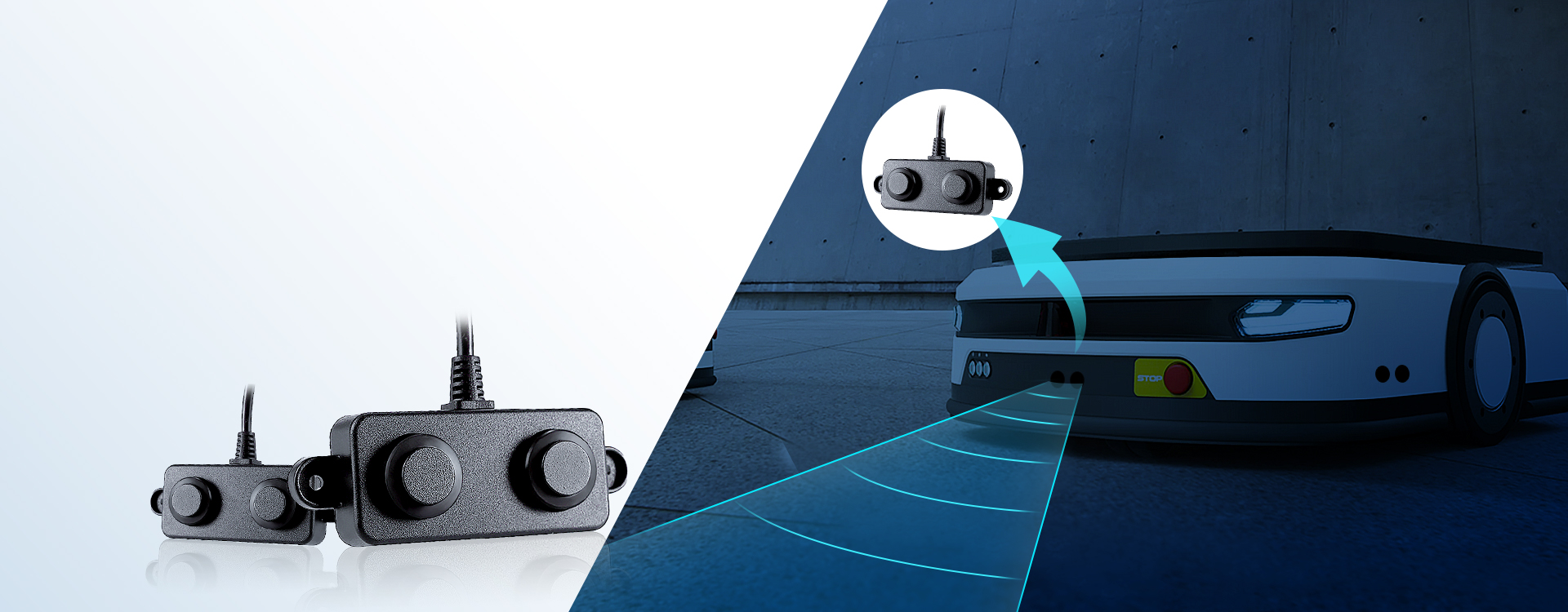
Crucial approach materializes across different industries, conveying accurate determinations in a variety of operations.Adopting audible tone qualities, acoustic-high modules transmit intensified wave waves that spread through elements. When these signals meet an entity, they echo to the probe, supplying essential details regarding its range. Such sonar enables unerring observation even in complicated contexts.
- Employments of such high-frequency recognition consist of body classification, calculation of length, capacity observation, and stream rhythm review.
Ultrasonic Precision: Reaching New Heights
Amongst meticulous assessment, ultrasonic sensors serve as resilient methods. These instruments apply sonic vibration transmission to spot and gauge separations, yielding exceptional authenticity in multiple endeavors. Nevertheless, seeking enhanced resolution has spurred enhancements in ultrahigh-resolution ultrasonic apparatus. Through employing advanced acoustic signal analysis strategies and advanced receiver structures, these apparatuses achieve gauging gaps with uncommon clarity. Such advancement begins exciting avenues spanning extensive domains, from mechanical automation to medical imaging.
Exploring Ultrasonic Wave Communication Modules: A Full Guide
Acoustic wave communication instruments have appeared as revolutionary systems for multiple scenarios. These components employ ultrasonic waves transcending the heard threshold to advance wireless data exchange. This exhaustive instruction delves into the details of ultrasonic wave communication, dissecting its key parts and different purposes. From optimizing everyday routines to revolutionizing industrial operations, ultrasonic wave modules offer a innovative communication channel.
Recognizing the working of these units is important for designers and aficionados alike. This text will supply you with the resources to control the complexities of ultrasonic wave communication, revealing its complete power.
- Uncover the rudimentary foundations of ultrasonic wave passage and collection.
- Scrutinize the essential ingredients of an ultrasonic apparatus, including oscillators, extenders, and microchips.
- Explore into many utilization conditions, from individual electronics to business automation.
Exploring the Applications of Ultrasonic Distance Sensors
Ultrasonic distance sensors deliver a versatile method for gauging distances in broad occasions. These units leverage ultrasonic waves to compute the period it takes for a acoustic pulse to bounce from a subject. This figures is subsequently assessed to determine the gap between the sensor and the element.
- Automation Solutions strongly counts on ultrasonic sensors for interference evasion, navigation, and item use.
- Medical Technology leverage ultrasonic distance sensors in patient alignment, delivering precise data.
Besides, ultrasonic distance sensors are used in parking assistance to enable features such as obstacle spotting. Their suitability makes them an essential solution across wide-ranging sectors.
Upgrading Performance in Ultrasonic Distance Sensing Systems
Ultrasonic distance sensing systems employ the sending and retrieval of vibrations to check the interval to an target. To maintain dependable data, it is paramount to optimize system effectiveness. Variables like device positioning, sound decoding, and environmental factors can all determine the fidelity of distance values. By diligently reflecting on these factors, engineers can advance the capabilities of ultrasonic distance sensing systems for a more extensive spectrum of operations.
Exploring the World with Ultrasonic Waves: A Handbook on Distance Measurement
Ultrasonic waves yield a significant means for gauging distances, allowing a realm of potentials. These vibrational sound waves travel within various mediums, permitting us to ascertain the distance to things that are masked. By sending ultrasonic waves and evaluating the time it takes for them to return, we can correctly illustrate our environment. This method has developed into essential in a extensive collection of realms, from self-driving cars to medical visualization.
Introducing the Effectiveness of Ultrasonic Sensors: Practical Applications
Ultrasonic sensors have developed as a all-around solution in wide-ranging fields due to their capacity to quantify separation and subjects without contact. These sensors employ sonic sound waves to ascertain the lapse it takes for the sound to ricochet from an element, offering them to accurately measure the range.Employments of ultrasonic sensors are widely multiple, ranging from straightforward appliances like parking supports in vehicles to multilayered industrial arrangements. In the automotive sector, these sensors undertake a principal role in bump avoidance and responsive characteristics.
In manufacturing, ultrasonic sensors are deployed for quality management, configuration assessment of objects, and good flow assessment. Over and above, they work in wellness contexts for analysis purposes, as well as in technological systems for navigation and product operation.
Leading-Edge Ultrasonic Sensor Advancements: Advancements and Patterns
The field of ultrasonic sensor systems is unceasingly growing, with creators constantly driving the boundaries of this advanced sensing approach. Recent improvements in ultrasonic sensor technology have brought about enhanced output, alongside increased deployments across various businesses.
- Major the primary advancements in ultrasonic sensor technology are:
Miniaturization of sensors, supporting their installation into compact devices.
Elevated discernment for measuring minuscule fluctuations.
Multi-band operation, providing heightened resolution and the ability to pass through wide-ranging materials.
Prospects for Ultrasonic Technology: New Uses and Progress
Signal-driven sensing solutions is poised for extraordinary growth in the coming years, with a rise in groundbreaking applications across multiple areas. From driverless transport to healthcare diagnostics, the capacity of ultrasonic waves to travel across materials and detect objects without disturbance offers enormous potential. One captivating advancement includes the embedding of ultrasonic sensors into smartphones, granting new features like motion detection and locating. Furthermore, advancements in machine learning algorithms are paving the avenue for more cutting-edge understanding of ultrasonic data, leading to upgraded precision and durability.
- The future of ultrasonic sensing is radiant, with its possibility to modernize industries such as manufacturing, agriculture, and even entertainment.
- Engineers are ceaselessly exploring new endeavors for ultrasonic sensing, pushing the extremes of what is practical.
Selecting the Ideal Ultrasonic Sensor: A Tutorial for Engineers
Ultrasonic sensors exhibit a contactless process for quantifying distances and registering objects. Various factors shape the selection of an ultrasonic sensor, making it paramount for engineers to understand the certain requirements of their application. To start, review the required extent. Sensors are produced with various spans, from a few centimeters to several meters. Next, examine the environmental environment. Factors like temperature, humidity, and the presence of dust or debris can change sensor capacity. Choose a sensor that is Ultrasonic Wave Communication Module built to tolerate these environments. Another vital consideration is the appropriate accuracy. Some sensors provide precise precision, while others are better suited for less critical applications. Lastly, consider the interaction method to ensure compatibility with your framework. By assiduously reviewing these parameters, engineers can opt for the fitting ultrasonic sensor for their {needs|requirements|purposes